
How Readest Thou? Part 2 God’s Word: Our Final Authority
By: Patrick O’Brien Jr.
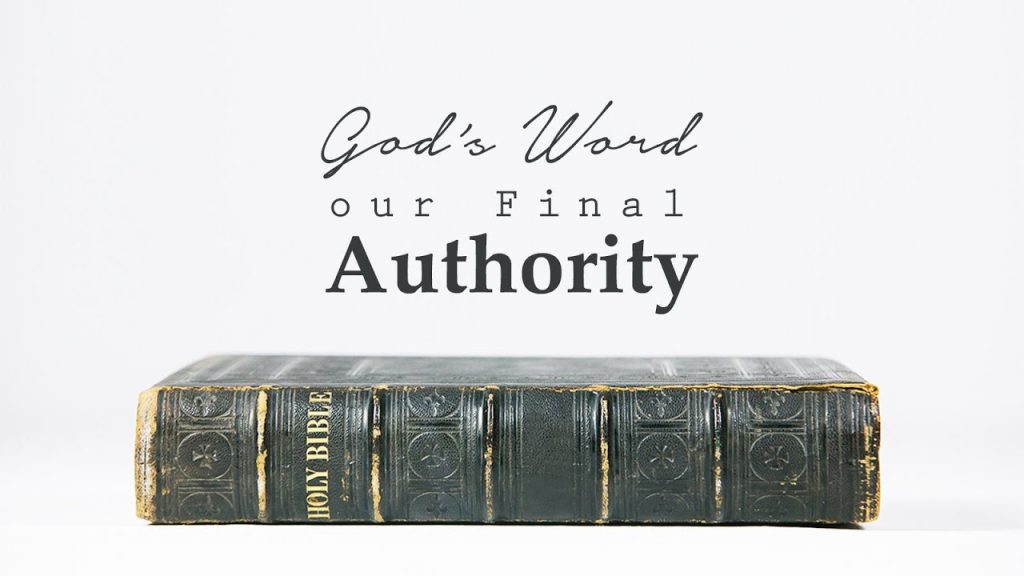
The article below is part two of a series exploring both practical and purposeful approaches in studying God’s Word. Recently, Once Lost Ministries reached out to several seasoned believers, asking questions concerning their view and sincere study of Scripture in an effort to further equip and encourage believers from falling for any of the abundant pitfalls plaguing today’s “Christianity”.
“Every word of God is pure: He is a shield unto them that put their trust in Him” Proverbs 30:5
When the lawyer asked Jesus what he had to do to inherit eternal life, Jesus didn’t simply send him back to the Old Testament. Jesus took him deeper. He asked a very serious question with the purpose of exposing the lawyer’s heart. (Luke 10:26)
Jesus not only challenged the lawyer’s direction but also his intention in reading the Bible.
This is often a missing piece when going to Scripture. The Bible isn’t a self-help book! It’s not some sort of mystical methodology! Let us all humbly consider why are we really reading God’s Word.
~Flynn Huseby (Once Lost Ministries)
———————————————————————
Upon being born again, how did your view of God’s Word change?
I can remember after being born-again of the Holy Spirit, I had an unquenchable desire to read the Word of God. Growing up as a Catholic we only had one Bible in the house. I believe it was my mom’s Bible and one that protestant friends, a few years prior, had given her when our family was going through a challenging season.
After I was born-again, I remember taking the Bible and reading the gospels and writing down what I was reading. I can remember staying awake late into the night just to read God’s Word. This went on for weeks. I became obsessed with knowing God. The only problem at the time, one I didn’t know was a problem, was that I was only purchasing and reading Catholic commentaries and books to better understand what I was reading. I, of course, thought I was already in the one true church, the Roman Catholic Church.
Fortunately, God used the man who shared the gospel with me to also disciple me over the next few years. To make a long story short, I began by studying scripture and Christianity with the intention of proving my church to be true. I studied and read countless Catholic books. By God’s Grace I was also reading the Bible and piece by piece I began to understand the Word of God. This led me to actually listen to what others were saying about what I was reading in the Bible and about the Catholic Church. There was a readiness of mind in me to be led by Truth, wherever it took me. After a few short years I matured in the faith and saw Roman Catholicism for what it was. I began to treasure God’s Word above any other words of men.
What is the purpose of God’s Word?
God’s Word has many purposes. It’s by hearing the Word of God that faith comes through the power of the Gospel. It’s God’s Word that nourishes the infant in Christ with the milk they can digest as a baby. It’s the same Word of God that becomes meat for the spiritually mature who knows how to rightly divide the Word like an adult can cut meat. It’s God’s Word that reveals to us the character and plan of God. It gives us breath in our spiritual lungs and spiritual food for our soul. It renews our mind and guides our heart with wisdom. God’s Word is how we see in the spiritual realm. It is a lamp to our feet, so we know where we stand and a light to our path, so we know the right direction on the narrow path. It’s God’s Word that brings us joy and peace even among heartache and trials. It’s the Word of God that trains us to think biblically, walk in truth and to love others like Christ loved us.
Your personal approach to reading and studying God’s Word:
I like to familiarize myself with a particular book first so I will read through the book once. If the book is smaller, I will sometimes read through two different Bible versions back-to-back. Then I will consult Bible dictionaries to learn about history and dates and geography. Then I will consult a couple commentaries and listen to their opinions and test them against God’s Word. Simultaneously to consulting commentaries I like to also consult Greek and Hebrew lexicons.
It’s also important to retain what I learn so I try to make a habit of writing down what thoughts came to mind while reading. What other connections or references to other books did I pick up on? Especially if the commentators did not pick up on it. I also try to choose a couple verses to memorize and commit to memory to hide away in my heart.
Any advice given by others that has been helpful is reading and studying the Scriptures:
All commentaries and commentators have biases. Hold to them loosely and consult a variety of them. Never treat a man’s word or interpretation as the “gospel” truth.
It’s wise to ask, “what does the author mean and by extension what does God mean” and not “what does this mean to me.”
God can and does use men to bring understanding to His Word. The same God who used men to communicate His Word can also use men to bring the understanding of His Word.
Take every word at its primary, ordinary, usual literal meaning unless the facts of the immediate context studied in light the of other passages indicate clearly otherwise.
The Golden Rule of interpretation is when the plain sense of Scripture makes common sense seek no other sense.
We always need to remember: “A text apart from context is a pre-text for whatever you want. So, keep God’s Word in context.”
Any recommended study helps and resources:
- The Interlinear Bible
- The Strongs concordance
- Parallel Bible (or multiple Bible translations)
- Bible dictionaries
A few favorite Bible verses regarding God’s Word and our approach to reading Scripture:
“Like newborn babies, long for the pure milk of the word, so that by it you may grow in respect to salvation.” (1 Peter 2:2)
“For though by this time you ought to be teachers, you have need again for someone to teach you the elementary principles of the oracles of God, and you have come to need milk and not solid food. For everyone who partakes only of milk is not accustomed to the word of righteousness, for he is an infant. But solid food is for the mature, who because of practice have their senses trained to discern good and evil.” (Hebrews 5:12-14)
“Therefore, having been justified by faith, we have peace with God through our Lord Jesus Christ, through whom also we have obtained our introduction by faith into this grace in which we stand; and we exult in hope of the glory of God.” (Romans 5:1-2)
“First of all, then, I urge that entreaties and prayers, petitions and thanksgivings, be made on behalf of all men, for kings and all who are in [a]authority, so that we may lead a tranquil and quiet life in all godliness and dignity. This is good and acceptable in the sight of God our Savior, who desires all men to be saved and to come to the knowledge of the truth. For there is one God, and one mediator also between God and men, the man Christ Jesus, who gave Himself as a ransom for all, the testimony given at the proper time. (1 Timothy 2:1-6)
———————————————————————
Patrick O’Brien Jr.’s teachings can be found on:
- YouTube- Philippians 1:9 Ministries
- Facebook, Instagram, and X- The Bible in Context
- Website- www.philippians19.org